Treatment Approach
General anesthesia:
General anesthesia is a safe and effective option for children who are very young, have significant dental anxiety, special medical needs, or require extensive dental treatment. It creates a deep sleep-like state, allowing your child to sleep comfortably throughout the appointment while receiving all necessary treatment in a single visit, helping provide a safer and more positive experience.
For patients who require this option, treatment is provided at the surgical facility AFD (Anesthesia for Dentistry), where your child is continuously monitored one-on-one by an anesthesiologist while our dental team completes the treatment.
When appropriate, sedation may be used to help children feel more relaxed and comfortable during dental treatment. It is carefully selected based on your child’s needs to support a safe and positive care experience.
Behaviour Guidance (Tell–Show–Do):
We believe children feel more comfortable when they know what to expect. Using our Tell–Show–Do approach, we explain each step in a simple, friendly way, show your child the instruments we’ll be using, and allow them time to see, touch, and ask questions before treatment begins. This helps build trust, reduce anxiety, and create a positive experience where children feel safe and confident.
How it helps:
• Builds trust and confidence
• Reduces fear and uncertainty
• Helps children feel safe and involved
• Encourages a positive dental experience
Minimal sedation:
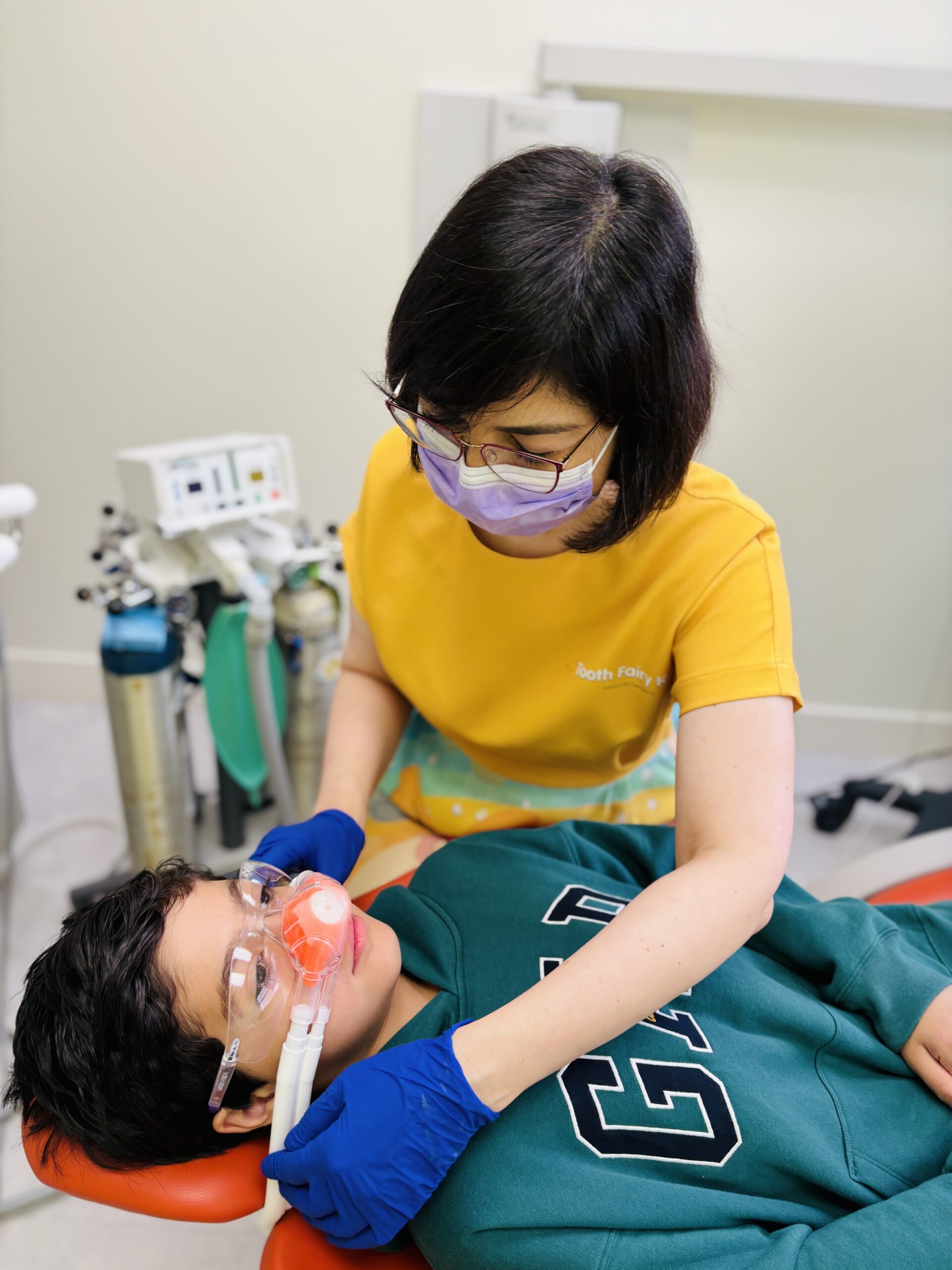
Nitrous oxide (“laughing gas”) is a safe and effective option that helps children feel more relaxed and comfortable during dental treatment. Your child breathes the gas through a small nose mask while remaining awake and able to follow instructions. It has a quick recovery time, and pure oxygen is provided before and after treatment.
Moderate sedation:
Oral sedation is offered in a flavoured liquid form that your child drinks before treatment. It is a safe and comfortable option for children who need help sitting still for longer or undergoing more complex dental procedures.
This is a moderate level of sedation compared to nitrous oxide, but your child remains responsive and able to follow instructions while feeling more relaxed and drowsier. They may fall asleep briefly but can be easily awakened after treatment. In some cases, oral sedation may be combined with nitrous oxide for additional support.